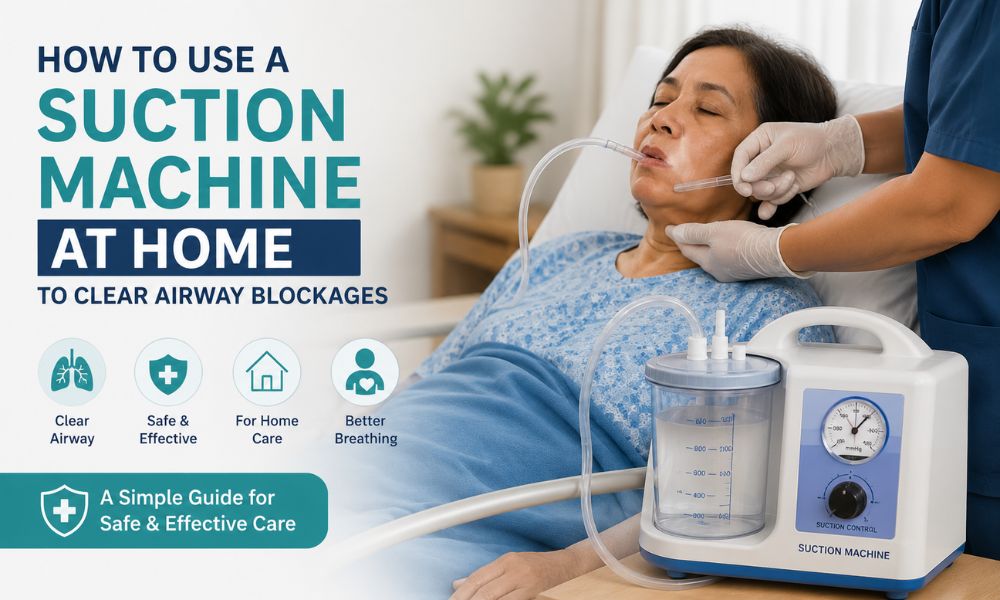
Breathing problems can become serious when mucus, saliva, or other secretions block the airway. In many home care situations, a suction machine helps remove these blockages and makes breathing easier for patients. It is commonly used for elderly patients, bedridden individuals, tracheostomy patients, and people recovering from surgery or severe respiratory conditions.
Using a suction machine correctly at home can improve comfort, reduce breathing difficulties, and lower the risk of infection. In this guide, we will explain how to safely use a suction machine at home in a simple and easy-to-understand way.
What Is A Suction Machine?
A suction machine is a medical device that removes mucus, saliva, blood, or other fluids from a patient’s airway. It creates negative pressure that helps clear blockages from the nose, mouth, or tracheostomy tube.
These machines are widely used in hospitals as well as home healthcare settings for patients who cannot clear secretions on their own.
When Is A Suction Machine Needed?
A suction machine may be required if the patient:
- Has difficulty coughing out mucus
- Suffers from respiratory illnesses
- Has a tracheostomy tube
- Is bedridden or unconscious
- Experiences excessive saliva buildup
- Has swallowing difficulties
- Needs post-surgery airway care
Signs that suctioning may be needed include:
- Gurgling breathing sounds
- Difficulty breathing
- Visible mucus in the airway
- Low oxygen levels
- Restlessness or discomfort
Things You Need Before Starting
Before using the suction machine, make sure you have:
- Suction machine
- Sterile suction catheter
- Disposable gloves
- Clean water or saline
- Collection container
- Tissue or towel
Always wash your hands properly before handling the equipment.
Step-By-Step Guide To Using A Suction Machine At Home
1. Prepare The Machine
Place the suction machine on a stable surface and connect all tubing properly. Turn the machine on and check whether the suction pressure is working correctly.
For adults, the pressure is usually set between 100–150 mmHg. For children, lower pressure settings are recommended.
2. Position The Patient Properly
Keep the patient in a comfortable upright or semi-upright position. This helps improve airflow and makes suctioning easier.
If the patient cannot sit, gently turn them to one side.
3. Wear Gloves And Maintain Hygiene
Wear disposable gloves to reduce infection risk. Make sure the suction catheter remains clean and sterile before use.
4. Insert The Suction Catheter Carefully
Gently insert the catheter into the mouth, nose, or tracheostomy tube without applying suction during insertion.
Do not force the catheter if resistance is felt.
5. Apply Suction While Removing The Catheter
Cover the suction control valve with your thumb while slowly pulling the catheter out in a rotating motion.
This process removes mucus and secretions from the airway.
Avoid suctioning for more than 10–15 seconds at a time because it may reduce oxygen levels.
6. Allow The Patient To Rest
After suctioning, allow the patient to relax and breathe normally for a few seconds before repeating if needed.
If the patient becomes dizzy, uncomfortable, or has trouble breathing, stop immediately and seek medical help.
7. Clean The Equipment
Flush the catheter with clean water or saline after use. Dispose of single-use catheters properly and clean the collection jar regularly.
Keeping the equipment clean helps prevent infections.
Important Safety Tips
Avoid Over-Suctioning
Frequent suctioning can irritate the airway and cause discomfort. Only suction when necessary.
Watch For Warning Signs
Stop the procedure and contact a doctor if the patient experiences:
- Bleeding
- Severe coughing
- Chest pain
- Difficulty breathing
- Blue lips or skin
- Sudden drop in oxygen levels
Use Sterile Accessories
Always use clean or sterile suction catheters and tubing to reduce infection risks.
Keep Backup Power Ready
If using an electric suction machine at home, ensure there is backup power available during emergencies.
Benefits Of Using A Suction Machine At Home
A suction machine can provide several benefits for home patients, including:
- Easier breathing
- Better oxygen flow
- Reduced risk of lung infections
- Improved patient comfort
- Faster removal of mucus buildup
- Better airway management for critical patients
Choosing The Right Suction Machine
While selecting a suction machine for home use, consider:
- Portability
- Noise level
- Suction power
- Battery backup
- Ease of cleaning
- Maintenance requirements
Reliable home healthcare providers like My Health Mart offer quality suction machines and medical support for home patient care.
Final Thoughts
A suction machine can play an important role in managing airway blockages at home. Proper usage helps patients breathe comfortably and reduces the chances of respiratory complications.
Always follow hygiene practices, use the machine carefully, and consult a healthcare professional if you are unsure about the procedure. With the right care and guidance, home suctioning can be performed safely and effectively.
Don’t Miss: Auto-BiPAP Vs. Fixed-BiPAP: Which Technology Provides Better Sleep Quality?