
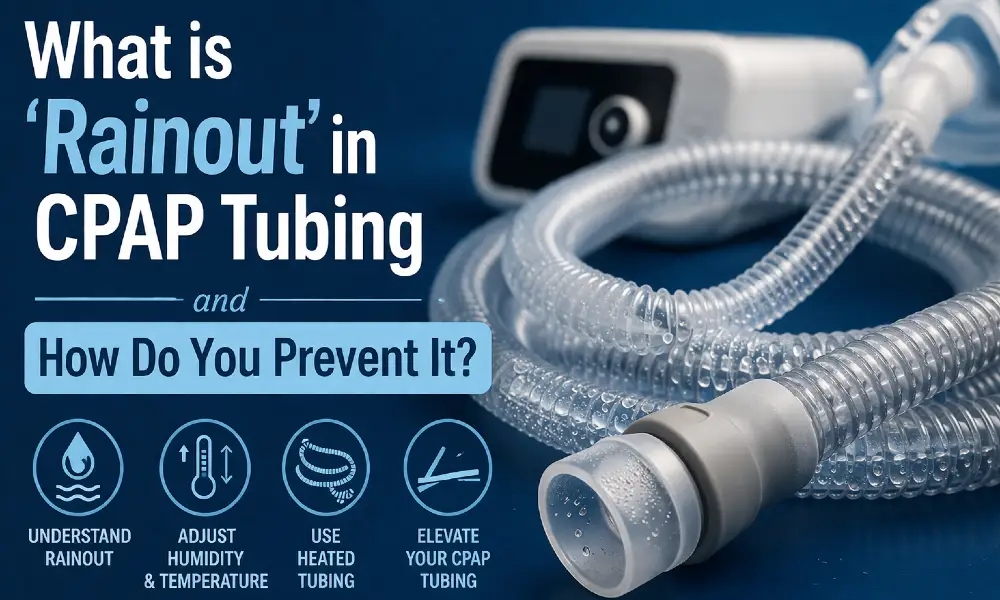
If you use a CPAP machine to manage sleep apnea, you know that a good night’s rest is worth its weight in gold. But there is one thing that can turn a peaceful slumber into a soggy nightmare: Rainout.
You’re drifting off to sleep when suddenly; you hear a rhythmic gurgle-gurgle in your tubing. A moment later, a splash of cold water hits your face or shoots up your nose. It’s startling, uncomfortable, and—if you don’t know what’s happening, a little bit gross.
Don’t worry, your machine isn’t broken. You’re just experiencing “rainout.” In this guide, we’ll dive deep into what causes this phenomenon and, more importantly, the simple steps you can take to keep your CPAP therapy dry and comfortable.
What exactly is CPAP Rainout?
In the simplest terms, rainout is condensation. Most modern CPAP machines use a heated humidifier to add moisture to the air you breathe. This prevents your nose and throat from drying out, which is a common side effect of pressurized air. However, physics can sometimes work against us.
Rainout occurs when the warm, moist air leaving your humidifier loses its heat as it travels through your CPAP tube. When the air cools down, it can no longer “hold” the moisture in the form of vapor. That vapor turns back into liquid water, which collects inside your tubing and eventually makes its way to your mask.
Why Does It Happen?
Think of it like a cold soda can “sweating” on a humid afternoon. The air around the glass is warm, but when it touches the cold surface of the glass, it cools down and forms water droplets on the outside.
With a CPAP, the process is reversed. The air inside your tube is warm and moist, while the air in your bedroom is likely much cooler. As the heat escapes through the plastic walls of the tubing, the air inside reaches its “dew point,” and, splash, you have rainout.
Why You Shouldn’t Ignore Rainout?
Aside from the obvious annoyance of getting water up your nose at 3:00 AM, rainout can cause several issues:
- Sleep Disruption: The gurgling sound and the feeling of water on your face will wake you up, defeating the purpose of your CPAP therapy.
- Skin Irritation: Constant moisture against your skin can cause rashes or breakouts under your mask seal.
- Bacteria and Mold: Damp environments are breeding grounds for germs. If your tubing stays wet, it increases the risk of mold or bacteria buildup.
- Reduced Therapy Effectiveness: If water blocks the airflow in your tube, your machine might struggle to deliver the correct pressure.
How to Prevent CPAP Rainout: 7 Proven Solutions
The good news is that rainout is a very solvable problem. Here are the most effective ways to keep your CPAP dry.
1. Use a Heated Hose (The Gold Standard)
If you aren’t using a heated hose yet, this is the single best investment you can make. A heated hose has a copper wire running through it that keeps the air at a constant temperature from the machine all the way to your mask.
Because the air doesn’t cool down as it travels, the moisture stays in vapor form. Most modern machines (like the ResMed AirSense 11 or Philips DreamStation) have specific settings that automatically sync with a heated hose to provide the perfect level of humidity without the rainout.
2. Invest in a Tubing Wrap
If you prefer not to use a heated hose, or if your machine doesn’t support one, a tubing wrap (sometimes called a “snuggle hose”) is your next best friend.
These are typically fleece or neoprene sleeves that zip or slide over your CPAP tube. They act as insulation, keeping the warmth inside the tube and preventing the cool room air from chilling the air inside. As a bonus, they make the plastic tube feel much softer against your skin if you move around at night.
3. Adjust Your Humidifier Settings
Sometimes, the fix is as simple as turning down the dial. If your humidity setting is too high for the temperature of your room, you’re essentially “overloading” the air with moisture.
Try This: Lower your humidifier setting by one or two notches.
The Trade-off: Be careful not to lower it too much, or you might wake up with a dry mouth or a “cotton-nose” feeling. It’s a balancing act!
4. Place Your CPAP Machine Lower Than Your Bed
Gravity is a powerful tool. If your CPAP machine is sitting on a high nightstand—level with or higher than your head, any water that condenses in the tube will flow directly down into your mask.
If you place the machine on a lower shelf or a small stool below the level of your mattress, the water will have to fight gravity to reach you. Instead, the condensation will likely slide back down the tube and into the humidifier water chamber where it belongs.
5. Warm Up Your Room
Since rainout is caused by the temperature difference between the air inside the tube and the air in your room, narrowing that gap can help.
If you like to sleep in a freezing room, you are much more likely to experience rainout. Try raising your thermostat by just 2 or 3 degrees, or keep your CPAP tube tucked under your bedsheets so your body heat helps keep it warm.
6. Use “Auto” Mode
Most modern CPAP machines come with “Auto” Climate Control settings. When you use a heated hose with these settings, the machine uses sensors to monitor the room temperature and humidity levels. It then adjusts the heat of the plate and the hose in real-time to ensure the air reaches you at the highest possible humidity without reaching the dew point.
7. Hang Your Hose
Using a hose hanger or “hose lift” can help create a more vertical path for the air. By keeping the hose elevated and then sloping down toward the machine, you ensure that any droplets that do form are quickly drained away from your face.
Troubleshooting: What to Do If You Wake Up with Water
If you wake up in the middle of the night and your hose is already gurgling, don’t panic. Here is your quick-action plan:
- Disconnect: Briefly turn off the machine and disconnect the hose from your mask.
- Drain: Take the hose to the sink or shower, hold it high in the middle, and let the water drain out of both ends.
- Dry: Reconnect the hose to the machine (without the mask) and run the “Mask Fit” or “Pre-heat” function for a few minutes. The blast of air will help dry out the interior.
- Adjust: Turn your humidity setting down by one level before going back to sleep.
Wrapping Up
CPAP therapy is a journey, and like any journey, there are a few bumps (or splashes) along the road. Rainout is a common rite of passage for many users, but it doesn’t have to be a permanent part of your sleep routine.
By using a heated hose, insulating your tubing, or simply adjusting your machine’s placement, you can eliminate the gurgling and get back to what matters most: a dry, comfortable, and restorative night of sleep.
If you’ve tried these tips and you’re still struggling, don’t hesitate to reach out to your equipment provider or sleep specialist. Sometimes a small tweak to your pressure settings or a different mask style can make all the difference.
Sweet (and dry) dreams!
Frequently Asked Questions (FAQ)
Q1. Is rainout dangerous?
It isn’t dangerous in the sense of drowning, you would wake up long before that, but it can be a choking hazard or cause you to inhale water droplets, which is unpleasant and can lead to a localized cough.
Q2. Can I use a heated hose with any CPAP?
Most machines made in the last 5-10 years have a specific connection for a heated hose. However, they are usually brand-specific. Hoses aren’t universal; a ResMed tube won’t fit a Fisher & Paykel machine, so always buy the one made for your specific model.
Q3. Does rainout happen more in the winter?
Yes! Winter is the prime season for rainout because your bedroom air is typically much colder, and you are likely turning up your humidifier to combat the dry winter air.
Q4. Will rainout damage my CPAP machine?
Generally, no. CPAP machines are designed with one-way valves and specialized chambers to prevent water from flowing back into the motor. However, excessive moisture that sits in the tubing or mask can eventually find its way into the sensitive pressure sensors of the machine if you move the device while it’s wet. To be safe, always empty your water chamber before moving your machine and ensure your tubing is dry before storage.
Q5. Can I use a “universal” heated hose if my machine doesn’t support one?
If you have an older machine that doesn’t have a dedicated “heated hose” port, you can purchase standalone heated hoses (such as the Hypernite). These come with their own separate power supply that plugs into a wall outlet rather than the CPAP itself. While they won’t communicate with your machine’s “Auto” settings, they are highly effective at maintaining a constant temperature and preventing condensation in older models.
Don’t Miss: Is It Safe To Sleep With An Oxygen Cylinder in the Room? A Complete Safety Guide