When a patient needs oxygen support at home, families often get confused between two main options: oxygen concentrators and oxygen cylinders. Both provide medical oxygen, but the way they work, the cost involved, and their safety levels are different.
For a patient’s comfort and safety, it is important to choose the right device. This article explains both options in a clear and simple way so users can understand which one is better for home use.
Understanding the Two Oxygen Options
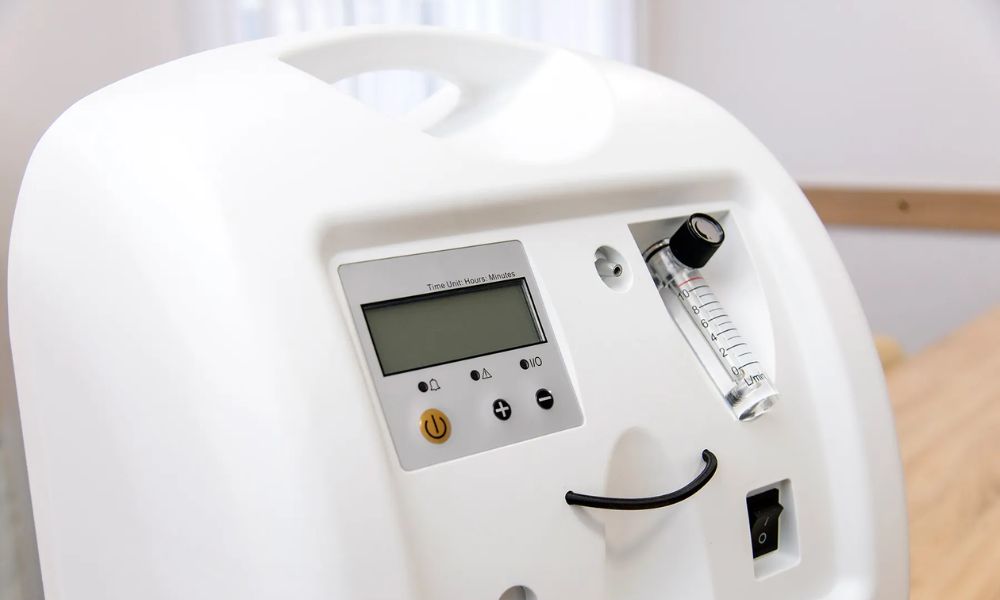
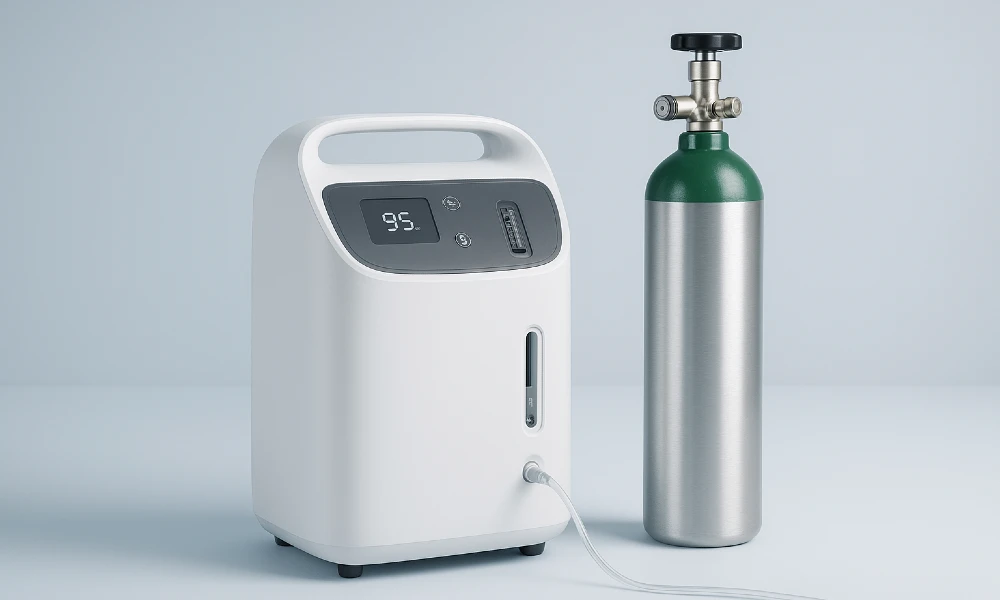
An oxygen concentrator is a machine that takes air from the surrounding environment, filters it, removes nitrogen, and gives the patient purified oxygen. It runs on electricity and can provide oxygen continuously.
An oxygen cylinder is a metal tank filled with compressed medical oxygen. Once the oxygen in the tank is finished, the cylinder must be refilled or replaced.
Both serve the same purpose, but their functioning and usage are very different.
How They Work in Real-Life Situations
For home use, the biggest difference is that a concentrator never runs out of oxygen as long as there is electricity. On the other hand, a cylinder gives oxygen only until the stored gas finishes.
If a patient needs oxygen for several hours every day or needs continuous support, a concentrator becomes more convenient. But if the usage is occasional or the oxygen is needed only for emergencies, a cylinder may be sufficient.
Ease of Use at Home
Families prefer devices that are simple to operate, especially when dealing with elderly patients.
Oxygen Concentrator:
- Easy to start with a single power button
- Shows oxygen flow on a digital display
- No need to refill
- Only basic cleaning of filters is required
Oxygen Cylinder:
- Requires a regulator and gauge setup
- Needs to be checked regularly to see how much oxygen is lef
- Must be refilled or replaced by a supplier
- Heavy and not easy to move
In day-to-day home use, concentrators are generally easier for families to handle.
Cost Difference
Cost is another important deciding factor for many families.
Oxygen Concentrator:
- Higher one-time purchase cost
- Very low running cost
- No refills required
- Good choice for long-term patients
Oxygen Cylinder:
- Low initial cost or easy to rent
- High refill cost over time
- Requires frequent doorstep delivery
- More expensive if used for many months
If oxygen therapy is going to be long-term, concentrators are much more economical over time. Cylinders become costly if used daily.
Safety at Home
Oxygen safety is very important because oxygen supports combustion.
- Concentrators are considered safer because they do not store oxygen under pressure.
- Cylinders store high-pressure gas, so they must be handled carefully.
Safety considerations for cylinders:
- Must be stored upright
- Should be kept away from heat and fire
- Leakage can be risky
- The valve must be opened very slowly
Safety considerations for concentrators:
- The machine should be kept in an open space
- Filters must be kept clean
- Should not be used near open flames
Overall, concentrators have fewer safety risks for home use.
Usage Duration
Patients who require oxygen for more than 10–12 hours a day benefit more from a concentrator because it provides a non-stop supply.
Cylinders are better for:
- Short-term therapy
- Temporary breathing issues
- Backup during power cuts
- Emergency use
If the patient’s doctor has recommended continuous oxygen support, cylinders alone are not practical because refilling becomes frequent and expensive.
Availability and Portability
Concentrators are available in two types:
- Stationary home concentrators (run on electricity)
- Portable concentrators (battery-operated, travel-friendly)
Cylinders also come in different sizes:
- Large cylinders for home bedside
- Small portable cylinders for travel or short outdoor trips
However, portable concentrators are easier to carry compared to portable cylinders because they are lightweight and not under pressure.
When Should You Choose an Oxygen Concentrator?
A concentrator is the better choice if:
- The patient needs long-term oxygen therapy
- There is stable electricity at home
- You want a low-maintenance option
- You want to avoid frequent refilling
- The required oxygen flow is up to 5–10 LPM
Concentrators are designed for home use and are highly recommended for chronic patients.
When Should You Choose an Oxygen Cylinder?
A cylinder is more suitable when:
- Oxygen is needed only for a short period
- There are frequent power cuts
- The patient needs a very high oxygen flow
- You need a backup option with a concentrator
- You want something immediately without a big investment
Cylinders work well as emergency support devices and as backup for concentrators.
Comparing Both Options in Simple Words
If we compare both in the simplest possible way:
| Factor | Oxygen Concentrator | Oxygen Cylinder |
|---|---|---|
| Oxygen Supply | Unlimited (with power) | Limited |
| Refilling | Not required | Needed regularly |
| Cost | Cheaper long-term | Costly long-term |
| Safety | High | Medium (pressurized gas) |
| Convenience | Very convenient | Some effort needed |
| Best For | Long-term therapy | Short-term or backup |
Final Conclusion
Both oxygen concentrators and oxygen cylinders are important for home oxygen therapy, but their usage depends on the patient’s needs.
For long-term, daily oxygen therapy, an oxygen concentrator is clearly the better choice because it is safe, economical, and provides a continuous supply.
For emergencies, short-term needs, or high oxygen flow, an oxygen cylinder is useful and sometimes necessary.
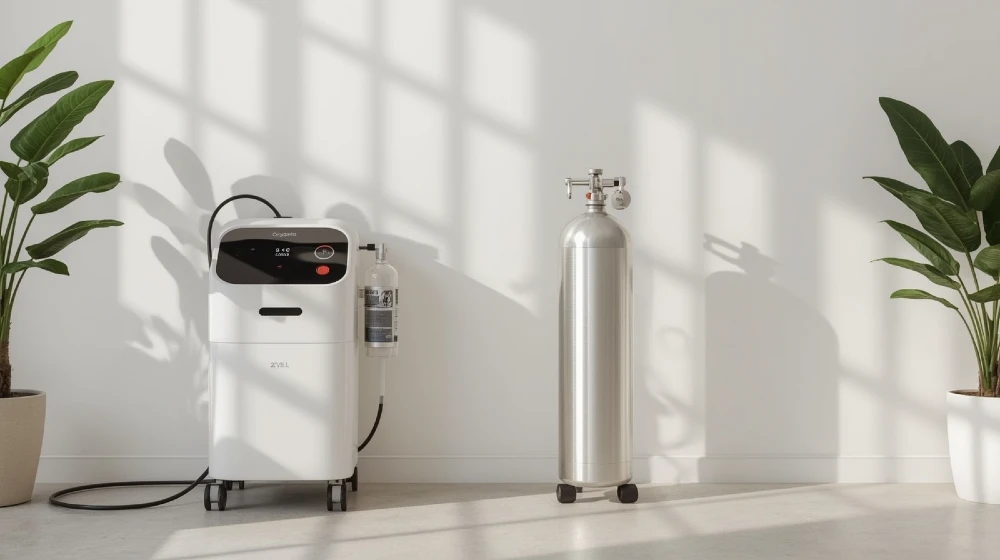
In many homes, families prefer keeping both a concentrator for daily use and a small cylinder for emergency backup.
Before selecting any option, always consult your doctor to understand the patient’s required flow rate and duration of oxygen therapy.
Don’t Miss: Home ICU Care vs. Hospital ICU Which is Better for Long-Term Patients