Maintaining a BiPAP (Bilevel Positive Airway Pressure) machine is one of those tasks that feel like a chore until you realize it is the only thing standing between you and a lung full of bacteria. If you use a BiPAP for sleep apnea or respiratory insufficiency, your mask is the most intimate part of your treatment. It sits on your face for eight hours a night, collecting skin oils, sweat, dead skin cells, and, if you’ve had a recent cold, residual germs.
A dirty mask doesn’t just smell unpleasant; it breaks down the silicone seal, causes skin breakouts, and can lead to sinus infections. To help you stay healthy and keep your equipment in top shape, I’ve put together this definitive guide and daily checklist for cleaning your BiPAP mask.
Why Daily Cleaning Isn’t Negotiable?
Many users think a weekly deep clean is enough. However, the environment inside a BiPAP mask is warm and humid, the perfect “petri dish” for mold and bacteria.
- Maintaining the Seal: Skin oils are the enemy of silicone. Over time, these oils “eat” into the mask cushion, making it slippery. This leads to air leaks, which means your BiPAP can’t deliver the programmed pressure you need to breathe.
- Preventing Skin Irritation: Ever woken up with a red rash where your mask sits? That is often contact dermatitis caused by old sweat and bacteria trapped against your pores.
- Extending Equipment Life: BiPAP supplies are expensive. Regular cleaning prevents the plastic from discoloring and the headgear from losing its elasticity, saving you money on replacements.
The Daily Checklist: Your 5-Minute Morning Routine
The best time to clean your mask is immediately after you wake up. If you let it sit all day, the oils harden and become much more difficult to remove.
1. Disconnect and Disassemble
Start by disconnecting the mask from the long gray or white breathing tube. Most modern masks have a “quick-release” clip or swivel. Then, remove the soft silicone cushion from the hard plastic frame. You don’t need to take the headgear (the fabric straps) off every single day, but you should at least separate the parts that touch your skin.
2. The “Sink Soak”
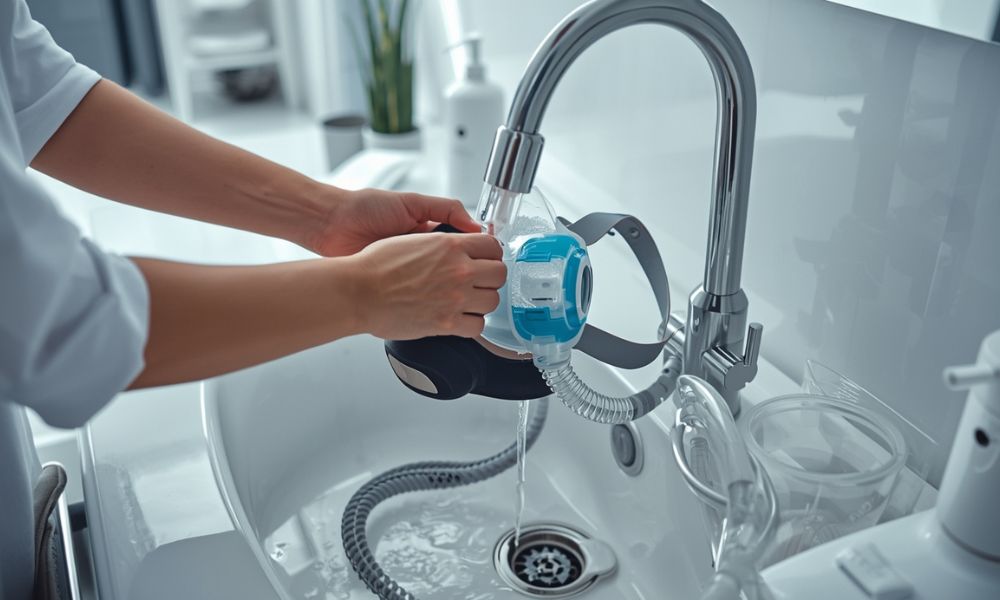
Fill a clean sink or a dedicated plastic basin with warm water. Avoid boiling water, as it can warp the plastic.
- The Soap Choice: Use mild, fragrance-free dish soap (like original Dawn or Ivory).
- What to Avoid: Never use bleach, alcohol, vinegar, or antibacterial soaps containing triclosan. These can dry out the silicone and cause it to crack, or worse, leave behind fumes that you’ll be inhaling all night.
3. Gentle Agitation
Submerge the cushion and the plastic frame. Use your fingers or a very soft lint-free cloth to wipe the interior and exterior surfaces. Pay extra attention to the “flaps” of the cushion where it meets your nose; this is where the most oil accumulates.
4. The Thorough Rinse
Rinse every part under running lukewarm water. Ensure there are no soap suds left behind. Dried soap residue can irritate your skin and eyes once the machine starts blowing air.
5. Air Dry (The “Shadow” Rule)
Place the parts on a clean, dry towel.
Crucial Tip: Keep the mask out of direct sunlight. UV rays degrade medical-grade silicone rapidly, making it brittle and yellow. Let it air dry in a shaded part of your room.
The Weekly Deep Clean: Beyond the Mask
While the mask touches your face daily, other parts of the system need a “Sunday Reset.” Once a week, you should expand your routine to include the following:
The Breathing Tube (The Hose)
The long tube acts as a highway for humidified air. Condensation (known as “rainout”) can trap moisture in the ridges of the hose.
- How to clean: Submerge the entire hose in warm, soapy water. Use a specialized “CPAP Tube Brush” (a long, flexible wire brush) to scrub the inside. Hang it over a towel rack or shower rod to dry completely before use.
The Headgear and Chin Straps
Fabric straps absorb sweat and hair products. Hand-wash them in warm soapy water, rinse well, and air dry. Do not put them in the clothes dryer, as the heat will kill the elasticity, and you’ll find the mask slipping off your head within a month.
The Water Chamber
If your BiPAP has a humidifier, the water tub needs a weekly soak in a solution of one part white vinegar to three part water. This kills any mineral buildup or “pink slime” (Serratia marcescens bacteria) that often grows in standing water.
Pro-Tips for the Busy BiPAP User
We all have mornings where we are running late. If you truly cannot do a full sink wash, here are some “bridge” solutions:
- Mask Wipes: Keep a tub of specialized CPAP/BiPAP mask wipes on your nightstand. These are alcohol-free and designed to strip away facial oils instantly. Wipe the cushion down as soon as you take it off.
- Distilled Water Only: Never use tap water in your humidifier. Tap water contains minerals that create a hard “scale” on your equipment, making it much harder to clean and potentially damaging the machine’s internal sensors.
- The “Nose Wash“: Wash your face right before putting the mask on at night. Removing your own skin oils and moisturizers before bed is the best way to keep the mask clean in the first place.
When to Stop Cleaning and Start Replacing
No matter how well you clean, medical equipment has a shelf life. Even the most pristine mask will eventually lose its structural integrity. Follow this general replacement schedule:
- Mask Cushion: Every 1–3 months (or when it becomes “tacky” or leaky).
- Mask Frame: Every 6 months.
- Headgear: Every 6 months.
- Disposable Filters: Every 2 weeks (these cannot be cleaned; they must be tossed).
Common Mistakes to Avoid
- Using a Dishwasher: While some manufacturers claim parts are “dishwasher safe,” the high heat and harsh detergents often shorten the lifespan of the mask by 50%. Hand-washing is always superior.
- Essential Oils: Never put drops of lavender or eucalyptus oil on your mask or in your water chamber. These oils can break down the plastic and may cause lung irritation when aerosolized.
- Reassembling While Wet: Putting a damp mask on your face is an invitation for fungal growth. Ensure everything is bone-dry before bedtime.
Summary Table: BiPAP Maintenance at a Glance CPAP Cleaning Schedule
| Component | Frequency | Cleaning Agent | Method |
|---|---|---|---|
| Mask Cushion | Daily | Mild Dish Soap | Hand wash & Air dry |
| Mask Frame | Daily | Mild Dish Soap | Wipe down |
| Humidifier Tub | Daily | Empty & Rinse | Use Distilled Water |
| Tubing/Hose | Weekly | Warm Soapy Water | Submerge & Brush |
| Headgear | Weekly | Mild Dish Soap | Hand wash & Air dry |
| Water Tub | Weekly | Vinegar/Water (1:3) | Soak for 20 mins |
Wrapping Up
Cleaning your BiPAP mask doesn’t have to be an hour-long ordeal. By dedicating just five minutes every morning to a quick soap-and-water rinse, you ensure your therapy remains effective, your skin stays clear, and your equipment lasts as long as possible. Remember: a clean mask is the secret to a good night’s sleep and a healthier set of lungs.
Don’t Miss: What Is The Difference Between a 3-Function And 5-Function ICU Bed?