
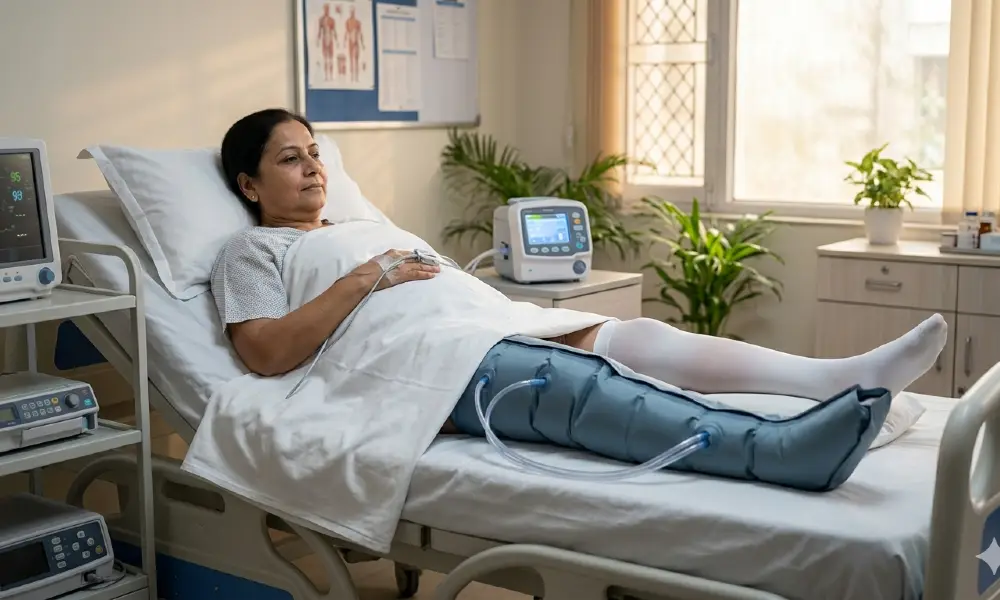
Surgery is often the first step toward recovery, but what happens afterward is just as important. One of the most serious yet often overlooked risks during post-surgical recovery is Deep Vein Thrombosis (DVT). This condition involves the formation of blood clots in deep veins, typically in the legs, and can become dangerous if the clot travels to the lungs.
To reduce this risk, doctors commonly recommend two methods: DVT pumps and compression stockings. Both aim to improve blood circulation, but they work in very different ways. This naturally raises an important question
Which one is better after surgery?
It’s not a straightforward choice between the two. It depends on several factors like mobility, type of surgery, and overall health. Let’s explore both options in depth so you can understand which solution is right for recovery.
Why DVT Prevention Matters After Surgery?
After surgery, the body goes through a phase of limited movement and healing. During this time, blood flow, especially in the legs, can slow down. When blood doesn’t circulate properly, it increases the chances of clot formation.
Some common reasons for increased DVT risk after surgery include:
- Staying in bed for long hours
- Reduced leg movement
- Temporary damage to blood vessels
- Increased clotting tendency due to the body’s healing response
Even young and otherwise healthy individuals can be at risk if they remain immobile for too long. That’s why doctors focus heavily on preventive care during this period.
Understanding the DVT Pump
A DVT pump, also called an intermittent pneumatic compression device, is a machine designed to actively improve blood circulation in the legs.
How does it function?
The device consists of inflatable sleeves that wrap around the legs. These sleeves fill with air and then release it in cycles. This process gently squeezes the legs, similar to how muscles naturally push blood upward when you walk.
This repeated compression helps:
- Keep blood moving
- Prevent pooling in veins
- Reduce the chance of clot formation
When It Is Commonly Used?
DVT pumps are usually seen in:
- Hospitals
- ICU settings
- Post-surgical recovery rooms
- Home care setups for critical patients
Advantages of a DVT Pump
- Provides active circulation without effort
- Works even if the patient is completely immobile
- Offers consistent and controlled pressure
- Highly effective for high-risk patients
Drawbacks to Consider
- Requires electricity and equipment
- Limits free movement while in use
- Can feel bulky or uncomfortable for some
- More expensive than other options
Understanding Compression Stockings
Compression stockings are stretchable garments worn on the legs that apply pressure in a specific pattern, tightest at the ankle and gradually looser toward the thigh.
How They Work
Unlike DVT pumps, stockings provide continuous passive pressure. This pressure supports the veins and encourages blood to flow upward toward the heart instead of collecting in the lower legs.
Where They Are Used
Compression stockings are commonly recommended for:
- Post-surgery recovery at home
- Long travel (to prevent clotting)
- People with swelling or varicose veins
- Mild to moderate DVT prevention
Benefits of Compression Stockings
- Easy to use daily
- Lightweight and comfortable
- Do not restrict movement
- Affordable and widely available
- Can be worn under regular clothing
Limitations
- Must be worn correctly to be effective
- Require proper size and fitting
- Depend on user consistency
- Not as powerful as mechanical devices for high-risk cases
Core Differences Between the Two
While both solutions aim to prevent DVT, they differ significantly in how they operate and when they are most effective.
| Aspect | DVT Pump | Compression Stockings |
|---|---|---|
| Type of Support | Active | Passive |
| Method | Inflates and deflates | Constant pressure |
| Best For | Immobile patients | Mobile patients |
| Comfort | Moderate | High |
| Cost | High | Low |
| Ease of Use | Requires setup | Very simple |
| Mobility | Restricted during use | No restriction |
Which One Works Better After Surgery?
The effectiveness of either option depends largely on the patient’s condition.
1. For Patients Who Cannot Move Much
If someone is bedridden or unable to walk after surgery, a DVT pump is usually the better option. Since it actively stimulates blood flow, it doesn’t rely on physical movement.
This makes it ideal for:
- Major surgeries
- ICU patients
- Elderly individuals with limited mobility
2. For Patients Who Can Move Slowly
If a patient is able to walk—even a little—compression stockings can be very effective. They support natural blood flow and are easy to incorporate into daily life.
They are best suited for:
- Home recovery
- Minor to moderate surgeries
- Long-term use
3. When Both Are Used Together
In many cases, doctors recommend using both methods at different stages of recovery.
- DVT pump during hospital stay
- Compression stockings after discharge
This combined approach ensures continuous protection from the early to later stages of healing
Comfort and Daily Practicality
From a patient’s perspective, comfort plays a big role in choosing the right option.
DVT Pump Experience
While effective, DVT pumps can feel restrictive. Patients may find it difficult to move around while connected to the device. The sensation of repeated inflation may also take some getting used to.
Compression Stockings Experience
Stockings are generally more comfortable and convenient. They allow complete freedom of movement and can be worn throughout the day without disrupting routine activities.
Because of this, most patients prefer stockings once they leave the hospital.
Cost and Accessibility
Cost is another important factor, especially for long-term use.
- DVT pumps involve higher costs due to the machine, maintenance, and setup.
- Compression stockings are budget-friendly and easily available in medical stores and online.
For many patients, stockings offer a practical solution without compromising much on effectiveness—especially in low-risk situations.
Safety and Precautions
Both methods are safe when used correctly, but improper use can lead to complications.
DVT Pump Safety Tips
- Ensure proper fitting of sleeves
- Follow the recommended usage time
- Keep the device clean and functional
Compression Stockings Safety Tips
- Choose the correct size
- Avoid folding or rolling the stockings
- Remove them periodically if advised
- Consult a doctor if you have arterial issues
Factors That Help You Decide
Choosing between a DVT pump and compression stockings depends on:
- Level of mobility
- Type of surgery
- Risk of clotting
- Budget and convenience
- Doctor’s recommendation
There is no universal answer, it’s always a case-by-case decision.
Final Comparison
- DVT Pump
- Best for high-risk and immobile patients
- Provides active blood circulation
- Used mainly in hospitals
Compression Stockings
- Best for mobile patients and home recovery
- Easy and comfortable to use
- Suitable for long-term prevention
Final Verdict
If you’re looking for a clear answer:
In the early stage after surgery, a DVT pump is more effective, especially when movement is limited.
In the later recovery phase, compression stockings become the better choice due to comfort and ease of use.
The smartest approach?
Use each at the appropriate stage to ensure the highest level of safety.
Wrapping Up
Recovering from surgery is not just about healing externally; it’s also about protecting your body from internal risks like blood clots. Both DVT pumps and compression stockings serve this purpose, but they do so in different ways.
Understanding when and how to use each can make a significant difference in recovery outcomes. While DVT pumps provide strong protection in critical situations, compression stockings offer a simple and sustainable solution for everyday use.
Before choosing either option, always consult your healthcare provider. A personalized plan based on your condition will always be more effective than a one-size-fits-all approach.
Don’t Miss: How to Monitor a Patient at Home: A Guide to Reading Patient Monitor Vitals