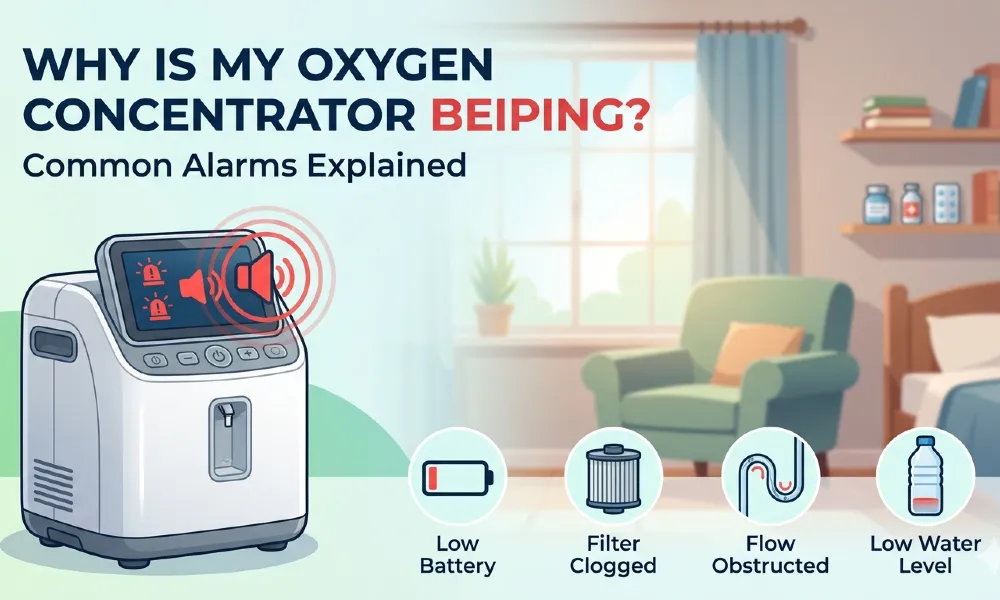
For anyone relying on supplemental oxygen, the sudden, piercing “beep” of an oxygen concentrator can be an immediate source of anxiety. These devices are lifelines, and when they start signaling, the instinct is to worry that something is critically wrong.
However, it is important to remember that beeping is a safety feature, not necessarily a sign of equipment failure. These alarms are designed to alert you to changes in performance, power, or airflow before they affect your health.
In this comprehensive guide, we will break down the most common reasons your oxygen concentrator is beeping, what those specific alarms mean, and how you can troubleshoot them at home.
1. The Low Oxygen Purity Alarm (The Most Common Culprit)
Most modern concentrators are equipped with an Oxygen Percentage Indicator (OPI). If the purity of the oxygen being delivered drops below a certain threshold, usually 85% to 90%, the machine will trigger a steady or intermittent beep.
Why does it happen?
The Sieve Beds are Worn Out: Inside the machine, “sieve beds” filter nitrogen out of the air. Over time, these beds degrade and lose their efficiency.
- Blocked Intake Filters: If the machine can’t “breathe” in enough ambient air, it can’t produce high-purity oxygen.
- High Humidity: Excessive moisture in the air can saturate the sieve material, rendering it less effective.
What to do:
First, ensure the machine is in a well-ventilated room, at least 12 inches away from walls or furniture. If the alarm persists, your device likely needs professional servicing to replace the sieve canisters.
2. Obstruction or “No Flow” Alarms
If the machine detects that oxygen isn’t reaching the exit port, it will sound an alarm. This is often a rapid, high-pitched beeping.
Why it happens:
- Kinked Tubing: The most common reason. If you’ve stepped on the tubing or it’s pinched under a chair leg, the flow stops.
- Blocked Cannula: Nasal cannulas can become clogged with debris or moisture over time.
- Humidifier Bottle Issues: If you use a humidifier bottle, the cap might be cross-threaded or the “pop-off” valve might be triggered due to a blockage.
What to do:
Straighten out all green extension tubing. If you suspect a clog, disconnect the cannula and see if the beeping stops. If it does, simply replace the cannula with a fresh one.
3. Power Failure or Low Battery Alarms
This is usually a continuous, loud siren-like sound. It is designed to wake you up if the machine stops providing therapy while you sleep.
Why it happens:
- Unplugged Cord: The plug may have slipped out of the wall outlet.
- Circuit Breaker Tripped: The outlet itself may have lost power.
- Battery Depletion: On portable oxygen concentrators (POCs), this signifies the battery is nearly empty.
What to do:
Check the power connection immediately. If the machine is plugged in but won’t turn on, try a different outlet. For portable users, switch to your AC power adapter or a backup oxygen cylinder immediately.
4. System Overheating (High Temperature)
Oxygen concentrators generate heat as they compress air. If the internal temperature exceeds safe limits, the machine will beep and may shut down to prevent internal damage.
Why it happens:
- Clogged Gross Particle Filter: The external foam filter is covered in dust or pet hair.
- Poor Ventilation: The machine is tucked into a closet or placed on a thick carpet that blocks the bottom vents.
- Extended Use in Hot Environments: Operating the device in a room above 35°C (95°F).
What to do:
Turn the machine off and let it cool down for 30 minutes. Clean the foam filter with warm soapy water, dry it completely, and reinstall it. Ensure the device is on a hard, flat surface to allow maximum airflow.
5. Technical Fault or “Service Required”
Sometimes the beeping is accompanied by a specific error code on the screen (e.g., E01, E02).
Why it happens:
This usually indicates an internal mechanical failure, such as a compressor malfunction or a faulty pressure sensor.
What to do:
Refer to your user manual to identify the specific error code. Most technical faults cannot be fixed at home and require a certified technician. Do not attempt to open the cabinet yourself, as this can void your warranty and pose a fire hazard.
Quick Troubleshooting Checklist
If your concentrator starts beeping right now, follow these steps in order:
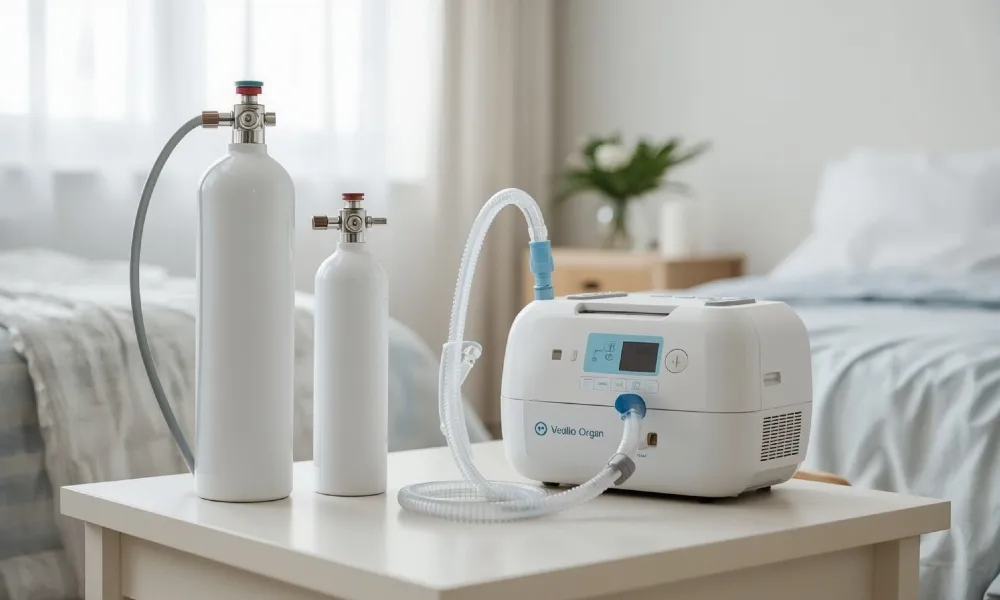
- Switch to Backup Oxygen: If you feel short of breath, immediately switch to your backup tank.
- Check the Tubing: Look for kinks or heavy furniture sitting on the line.
- Check the Power: Ensure the plug is firm in the socket.
- Clean the Filter: Remove the external foam filter and check for dust buildup.
- Restart the Machine: Turn it off, wait 60 seconds, and turn it back on.
Maintenance Tips to Prevent Alarms
- Weekly Filter Wash: Wash the cabinet filter once a week to prevent overheating.
- Monthly Cannula Replacement: Change your nasal cannula every 2–4 weeks to ensure hygiene and flow.
- Run It Regularly: If you have a backup machine, run it for 20 minutes every month to keep the internal seals lubricated and the sieve beds dry.
- Avoid Extension Cords: Always plug your concentrator directly into a wall outlet to prevent voltage drops that trigger power alarms.
Summary Table: Understanding the Beeps
| Alarm Sound | Likely Meaning | Immediate Action |
|---|---|---|
| Continuous Beep | Power Failure | Check plug/outlet; switch to backup tank. |
| Intermittent Beep | Low Oxygen Purity | Check filters; ensure room ventilation. |
| Rapid Beeping | Flow Blockage | Check for kinks in the tubing or cannula. |
| Beep + Error Code | Internal Technical Fault | Contact your equipment provider for service. |
Frequently Asked Questions
Q1. What should I do if my concentrator beeps and I feel short of breath?
Your immediate safety is the priority. If you experience shortness of breath while the alarm is sounding, switch to your backup oxygen cylinder or portable unit right away. Once you are breathing comfortably, you can troubleshoot the machine. If your symptoms do not improve after switching to backup oxygen, contact emergency services or your doctor immediately.
Q2. Can a dirty filter really cause my oxygen concentrator to beep?
Yes, a clogged intake filter is a leading cause of alarms. When dust or pet hair blocks the “gross particle” filter, the compressor must work harder, leading to overheating or a drop in oxygen purity. Most manufacturers recommend rinsing the foam filter weekly with warm, soapy water and letting it air dry completely before reinstalling it to prevent these issues.
Q3. Why does my machine beep even when the power is on?
This often indicates a “Low Flow” or “Obstruction” alarm. Even if the machine has power, it will beep if it detects that oxygen cannot move through the tubing. Check for any kinks in the green extension hose, ensure your nasal cannula isn’t clogged, and verify that the humidifier bottle cap is screwed on tight without any air leaks.
Q4. How long do the sieve beds last before they cause a purity alarm?
Sieve beds typically last between six months to two years, depending on the environment and how often the machine is used. High humidity can shorten their lifespan by saturating the material that filters nitrogen. If you see a “Low O2” light or hear a steady beep despite clean filters, it is likely time for a professional sieve bed replacement.
Q5. Is it safe to use an extension cord with my oxygen concentrator?
It is strongly discouraged. Oxygen concentrators require a consistent, high-voltage draw to run the compressor efficiently. Using an extension cord can cause a voltage drop, which triggers the power failure alarm or causes the machine to underperform. Always plug your device directly into a grounded wall outlet to ensure stable operation and prevent potential fire hazards or system errors.
Final Thoughts
A beeping oxygen concentrator is doing its job, keeping you safe. By understanding these common alarms, you can stay calm and resolve most issues in minutes. However, always ensure you have a full backup oxygen cylinder on hand for emergencies.
Would you like me to create a printable “Emergency Troubleshooting Card” based on these steps that you can keep near your machine?
Don’t Miss: DVT Pump Vs. Compression Stockings: Which Is Better Post-Surgery