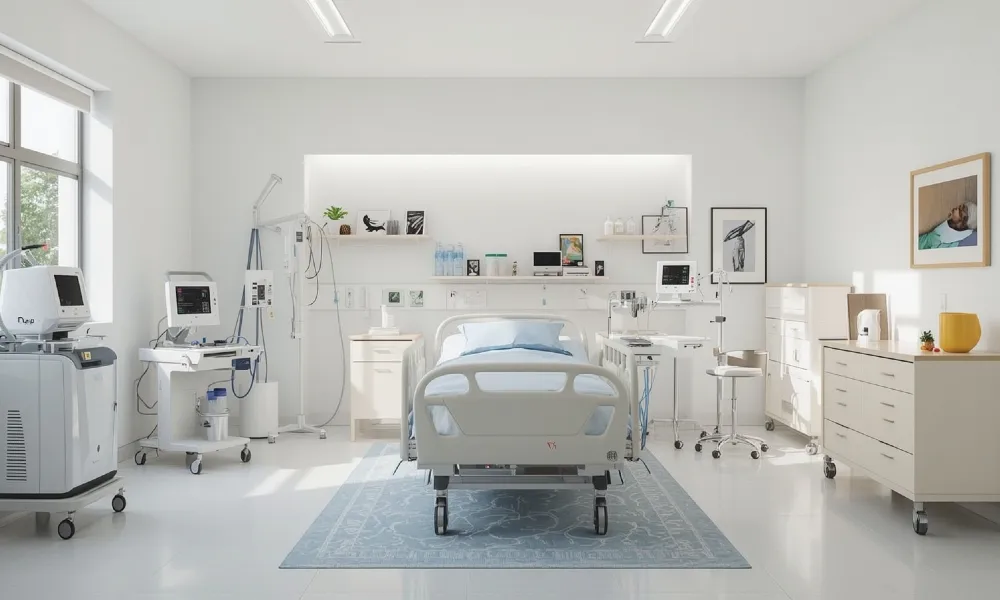
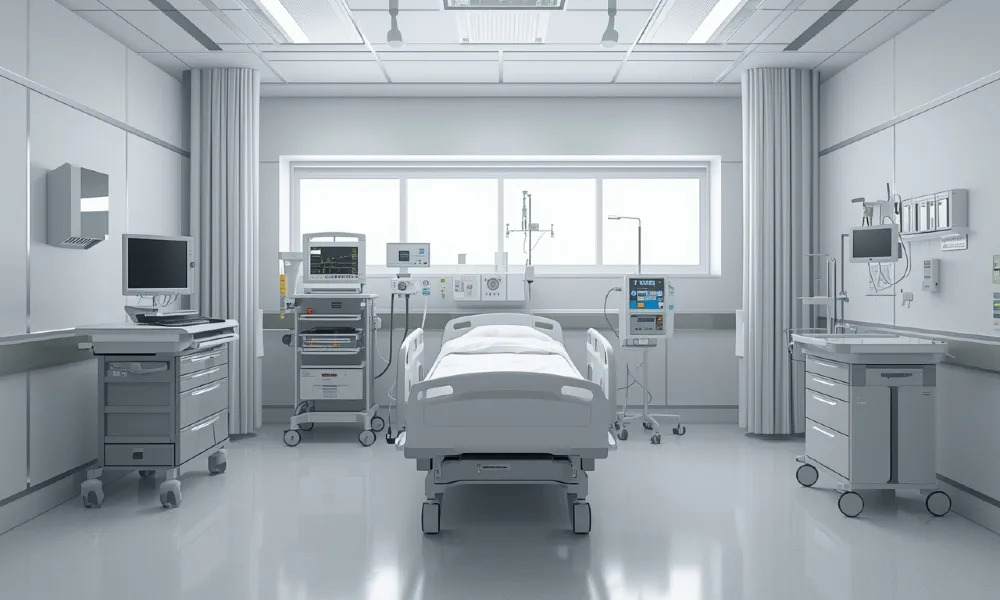
An Intensive Care Unit (ICU) is a highly specialized area designed to care for patients who are seriously ill and need continuous medical attention. These patients may be recovering from major surgery, severe infections, breathing problems, heart conditions, or trauma. ICU care focuses on close monitoring, quick response, and advanced medical support.
In recent years, many families have started opting for home ICU care. With the availability of modern medical equipment and trained healthcare professionals, it is now possible to provide ICU-level support at home for stable patients. This approach offers comfort, emotional support, and reduced hospital-related stress.
To understand how ICU care works, whether in a hospital or at home, it is important to know the essential equipment required in an ICU, what each device does, and how it helps in patient recovery.
1. ICU Bed
An ICU bed is one of the most important components of intensive care. It is very different from a regular bed.
ICU beds are designed to:
- Adjust the head, legs, and height
- Improve blood circulation
- Reduce breathing difficulty
- Prevent bedsores
- Allow easy access for caregivers
These beds can be repositioned using a remote or control panel, making patient movement safer and more comfortable.
Home ICU benefit: For patients who are bedridden or recovering from long illnesses, an ICU bed at home improves comfort and makes daily care much easier for family members and nurses.
2. Patient Monitoring System
A patient monitor continuously tracks vital signs such as:
- Heart rate
- Blood pressure
- Oxygen saturation
- Breathing rate
This equipment gives real-time information about the patient’s condition and alerts caregivers if something goes wrong.
Real-life use case: A patient recovering from heart surgery can be monitored at home, allowing doctors and nurses to act quickly if vital signs change
3. Ventilator
A ventilator supports or completely controls a patient’s breathing when they are unable to breathe properly on their own.
Ventilators are commonly used for patients with:
- Severe lung infections
- Respiratory failure
- Brain injuries
- Post-surgical complications
Modern ventilators used in home ICU setups are compact, quiet, and easy to manage under professional supervision.
Home ICU advantage: Patients can recover in a peaceful home environment while receiving life-saving breathing support.
4. BiPAP and CPAP Machines
Not all patients need full ventilator support. Some only need help with breathing, especially during sleep.
- BiPAP (Bilevel Positive Airway Pressure) helps patients inhale and exhale more comfortably.
- CPAP (Continuous Positive Airway Pressure) keeps airways open with constant pressure.
- These machines are widely used for sleep apnea, COPD, and other breathing disorders.
Home healthcare use: Patients can continue long-term respiratory support without staying in the hospital.
5. Oxygen Supply Equipment
Oxygen therapy is a common requirement in ICU care.
This includes:
- Oxygen concentrators
- Oxygen cylinders
- Oxygen masks or nasal cannulas
Oxygen helps maintain healthy oxygen levels in the blood and reduces strain on vital organs.
Safety focus: Oxygen equipment should always be used as prescribed and kept away from heat or fire sources.
6. Suction Machine
A suction machine helps remove mucus, saliva, or fluids from the patient’s airway. This is essential for patients who cannot cough or swallow effectively.
It prevents:
- Choking
- Breathing difficulty
- Lung infections
Home ICU use case: Patients with stroke, paralysis, or reduced consciousness often require suction support.
7. Infusion Pump
An infusion pump delivers fluids, medications, or nutrition directly into the body in a controlled manner.
It ensures:
- Accurate dosage
- Consistent flow
- Reduced risk of human error
Home benefit: Patients requiring long-term IV medicines or pain management can continue treatment safely at home.
8. Syringe Pump
A syringe pump is used for delivering small and precise amounts of medication, especially in critical care.
It is commonly used for:
- Pain relief medicines
- Sedatives
- Emergency drugs
This device is especially useful for patients who need continuous medication at a fixed rate.
9. Defibrillator
A defibrillator is a life-saving device used during sudden cardiac emergencies.
It delivers an electric shock to restore a normal heart rhythm when the heart stops or beats irregularly.
Home safety advantage: For patients with heart disease or high cardiac risk, having a defibrillator nearby adds an extra layer of emergency preparedness.
10. Nebulizer
A nebulizer converts liquid medicine into a fine mist that can be easily inhaled into the lungs.
It is widely used for:
- Asthma
- COPD
- Pneumonia
- Breathing infections
Real-life benefit: Elderly patients and children often find nebulizers easier to use than inhalers.
11. Feeding Pump
Some ICU patients cannot eat or swallow normally and require tube feeding.
A feeding pump:
- Delivers nutrition slowly
- Prevents choking
- Ensures proper calorie intake
Home ICU benefit: Long-term patients can receive balanced nutrition without repeated hospital visits.
12. ECG Machine
An ECG machine tracks and displays the heart’s electrical signals, helping doctors understand how the heart is beating and functioning.
It helps doctors detect:
- Irregular heartbeats
- Heart stress
- Early warning signs of cardiac issues
In a home ICU setup, portable ECG machines allow routine heart monitoring.
13. Pulse Oximeter
A pulse oximeter is a small but vital device that measures oxygen levels in the blood.
It is easy to use and provides instant readings, making it useful for continuous monitoring.
Home healthcare use: Families can quickly check oxygen levels and alert healthcare providers if readings fall.
14. Emergency Crash Cart
A crash cart contains emergency medicines and tools needed during sudden medical emergencies.
It may include:
- Emergency drugs
- Syringes
- Airway equipment
- IV supplies
Home ICU importance: Being prepared helps save valuable time during critical moments.
15. Infection Control and Safety Equipment
Hygiene and infection control are extremely important in ICU care.
This includes:
- Medical gloves
- Mask
- Hand sanitizers
- Disinfectants
- Protective gowns
Proper hygiene reduces the risk of infections, especially in home environments.
Why ICU Equipment Is Important for Home Healthcare?
Home ICU care is becoming increasingly popular due to its many advantages.
Key Benefits of Home ICU Setup:
- Comfort of staying with family
- Reduced hospital-acquired infection risk
- Cost-effective long-term care
- Personalized attention
- Faster emotional recovery
With proper planning, equipment, and professional support, home ICU care can be both safe and effective.
How to Choose the Right ICU Equipment?
The type of ICU equipment required depends on:
- Patient’s medical condition
- Doctor’s recommendations
- Duration of care
- Level of monitoring needed
It is always advised to consult healthcare professionals before setting up ICU equipment at home.
My Health Mart
My Health Mart offers reliable and professional ICU Setup Services in Delhi, helping patients receive critical care in the comfort of their homes. We provide end-to-end ICU solutions, including ICU beds, ventilators, patient monitors, oxygen support, suction machines, and other essential medical equipment.
Our goal is to make advanced healthcare accessible, safe, and stress-free for families. Each setup is guided by medical experts to ensure proper installation, hygiene, and patient safety. With prompt service, quality equipment, and dedicated support, My Health Mart makes home ICU care a practical and trusted option for long-term recovery.
Final Thoughts
ICU equipment plays a crucial role in saving lives and supporting recovery. Each device, from patient monitors to ventilators, has a specific purpose in maintaining stability and ensuring patient safety.
With advancements in medical technology, ICU-level care is no longer limited to hospitals. Home ICU setups provide patients with high-quality medical support while allowing them to heal in a familiar and comforting environment.
Understanding ICU equipment helps families make informed decisions, reduces anxiety, and ensures better care for their loved ones.
Don’t Miss: What are the Alternatives to Oxygen Concentrators?